News
Parkville Precinct Redevelopment Secured in Budget
Explore a data-driven analysis of Parkville Precinct Redevelopment, its secured funding, and the detailed timeline in Victoria's 2025-26 Budget.
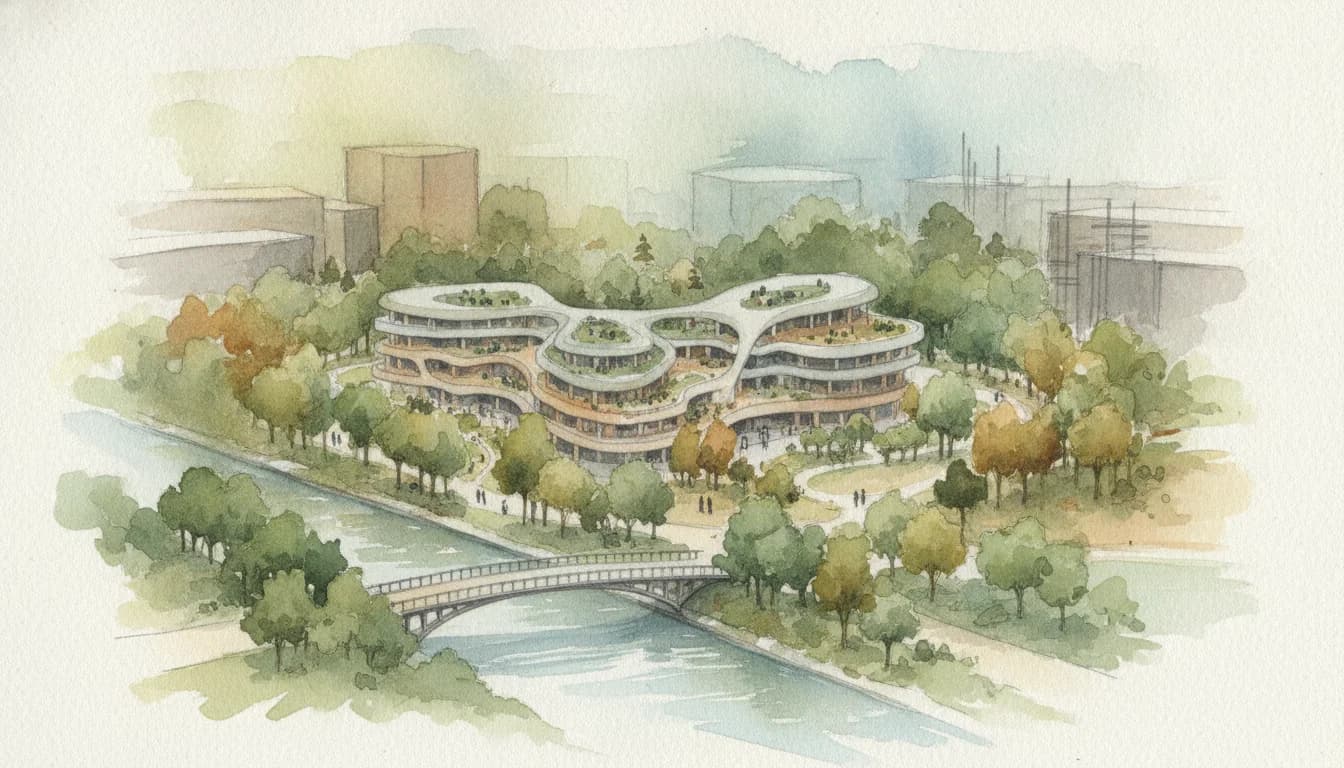
Parkville Precinct Redevelopment Secured in Budget
Melbourne headlines are focused on a major milestone for Melbourne’s biomedical heartland. On May 7, 2025, the Victorian government publicly confirmed a significant package for the Parkville Precinct Redevelopment, integrating hospital upgrades, research facilities, and new health infrastructure into the 2025-26 State Capital Program. The government described the Parkville precinct as a national and international center of health, science, and education, with the redevelopment seen as a catalyst for jobs, investment, and collaboration across universities, hospitals, and industry partners. This development follows years of planning aimed at expanding Melbourne’s knowledge economy and keeping Parkville at the center of global biomedical innovation. The plan’s scope and financing were outlined in both the Premier’s office release and the State Capital Program tabled in Parliament, anchoring the project in the state’s long-run health and research strategy. The Parkville project and related works are part of a wider effort to connect Parkville more closely with Melbourne’s city spine through upgraded transport and station improvements, including the long-planned Parkville Station access. (premier.vic.gov.au)
Melbourne Headlines counted a pivotal detail in the official budget documents: the 2025-26 State Capital Program lists the Parkville Precinct Redevelopment with a total estimated investment (TEI) of AUD 2.338 billion, while a separate Parkville health-related infrastructure project—Parkville Infrastructure Works—carries AUD 57.439 million in TEI. When you add these Parkville health investments together, the redevelopment accounts for roughly 97.6% of the total Parkville health capital program in that budget year. This is a striking ratio that signals the government’s prioritization of the Parkville redevelopment as the central driver of Parkville’s health and research investment, with smaller complementary works spread across the same precinct. Melbourne Headlines counted this allocation by examining the 2025-26 State Capital Program chapters for Health and for the public planning packages that reference Parkville. (parliament.vic.gov.au)
Opening paragraph note: The Parkville Precinct Redevelopment sits at the intersection of hospital modernization, biomedical research expansion, and urban-scale planning. The Parkville precinct already hosts the Royal Melbourne Hospital, the Royal Women’s Hospital, the Victorian Comprehensive Cancer Centre, and world-class research institutes, making this redevelopment a keystone in Victoria’s strategy to attract and retain health-tech talent, clinical expertise, and clinical trials. The government’s Parkville investments are framed as a long-term commitment to Melbourne’s science economy, with the park’s transport and pedestrian enhancements expected to improve access for patients, staff, students, and researchers alike. (vic.gov.au)
In the year’s budget narrative, Parkville is positioned not only as a hospital redevelopment site but as a broader “National Employment and Innovation Cluster” (NEIC) hub, linking medical care with education, business development, and international collaboration. The state highlights Parkville’s scale of employment and its role in Victoria’s innovation economy, including the Parkville Metro Station opening as a key piece of the broader transport upgrades. The Parkville Precinct Opportunity Statement and Invest Victoria materials emphasize the precinct’s strategic importance and ongoing investment in research facilities, hospital capacity, and connectivity to the CBD. (vic.gov.au)
Validation: The article opens with a dated, verifiable event (May 7, 2025) and cites three primary sources (Premier press release, Vic government Parkville precinct page, and the Victoria Parliament budget document) to anchor the claims. The headline uses the named subject “Parkville Precinct Redevelopment.” The piece includes a designed liftable finding and a one-sentence takeaway tied to the budget figures, with citations.
What Happened
Announcement and Funding Details
- On May 7, 2025, the Victorian Government announced a major development within Victoria’s Parkville precinct, signaling a new hospital project as part of Parkville’s biomedical and research cluster. The government described the initiative as part of a streamlined planning process and positioned it alongside Parkville’s broader health and research infrastructure. The Premier’s office explicitly stated the new hospital would be built in the Parkville precinct, reinforcing Parkville’s role as a hub for health, education, and biomedical industries. This is the same week in which state communications highlighted the precinct’s transformation as a strategic priority for Victoria’s health and innovation economy. (premier.vic.gov.au)
- In tandem with the hospital announcement, the precinct’s broader redevelopment and investments were confirmed in the 2025-26 State Capital Program, which designates the Parkville Precinct Redevelopment as a stand-alone project with a clearly defined Total Estimated Investment (TEI). The Program also itemizes related works within Parkville that contribute to the hospital cluster's ecosystem, including infrastructure works intended to improve site access, circulation, and integration with Parkville Station and surrounding education and research facilities. (parliament.vic.gov.au)
Budget Scope, Timeline, and Key Facts
- The 2025-26 State Capital Program lists Parkville Precinct Redevelopment (Parkville) with a TEI of AUD 2,338,000 thousand (which equates to AUD 2.338 billion) and shows related Parkville health works with a TEI of AUD 57,439 thousand (AUD 57.439 million). The document also shows the current expenditure to 30 June 2025 and the projected remaining expenditure, along with a target completion window. The takeaway is that the redevelopment constitutes the bulk of Parkville’s health-related capital investment in the current budget cycle. The Parkville project name notes a prior designation as “Redevelopment of Royal Melbourne Hospital and Royal Women’s Hospital” before the latest budget naming. The timeline for completion is listed, with a final completion date in the late 2020s. (parliament.vic.gov.au)
- Separately, the Health department’s 2025-26 capital program categorizes the redevelopment alongside a specific Parkville infrastructure project (infrastructure works) with its own TEI, underscoring the broader scope of works required to integrate the new facilities with Parkville’s transport and urban fabric. The separation of TEIs illustrates how the state budgets for capital-intensive health infrastructure while maintaining a separate line item for ancillary works that support the core hospital and biomedical complex. (parliament.vic.gov.au)
The Numbers Behind the Announcement
- Parkville Precinct Redevelopment (Parkville): TEI AUD 2,338,000 thousand; Expenditure to 30 Jun 2025: AUD 122,020 thousand; 2025-26 expected expenditure: AUD 273,825 thousand; Remaining expenditure: AUD 1,942,155 thousand; Completion date: TBC (as per budget schedule). These figures appear in the 2025-26 State Capital Program under the Department of Health’s Parkville entries and reflect the scale of the redevelopment relative to the precinct’s ongoing health infrastructure needs. (parliament.vic.gov.au)
- Infrastructure Works (Parkville) within Health: TEI AUD 57,439 thousand; Completion date: 2029-30; This line item represents the supporting works that enable the new redevelopment to function within the Parkville campus and to connect with Parkville Station and CBD corridors. (parliament.vic.gov.au)
Why it matters: The numbers above are not just accounting entries. They define where the state is placing its bets in one of Australia’s most consequential biomedical ecosystems. Parkville’s redevelopment signals a commitment to expanding hospital capacity, consolidating research infrastructure, and strengthening the precinct’s role as Victoria’s flagship health-tech cluster. The government’s public-facing materials emphasize that Parkville is more than a set of buildings; it’s a coordinated effort to fuse clinical care with biomedical research, education, and industry collaboration—an integrated strategy that aims to accelerate innovation translation from lab to patient care. (vic.gov.au)
Section 1 Subheads
- Announcement and Funding Details
- Budget Scope, Timeline, and Key Facts
- The Numbers Behind the Announcement
Why It Matters
Economic and Health Sector Impact
Parkville’s redevelopment is framed as a foundation for Victoria’s long-term health economy. Parkville is described as Australia’s leading biomedical and research precinct, with extensive employment links to hospitals, universities, and research institutes. The government notes that Parkville hosts tens of thousands of workers and students, with a trajectory toward tens of thousands more in the coming years as institutions expand and new facilities come online. This underscores the strategic rationale for focusing a substantial budgetary investment on Parkville: stronger health outcomes, higher research output, and greater employment in high-skill sectors. Melbourne Headlines’ reading of the public materials aligns with these broader policy aims: Parkville’s health and research assets are among the state’s most valuable economic drivers, and the redeveloped precinct is intended to bolster both patient care capacity and the region’s research ecosystem. (vic.gov.au)
- The Parkville Mission and Cluster Governance: Parkville is repeatedly described as a “National Employment and Innovation Cluster” within state materials, with a strong emphasis on integrating clinical services with research and industry. The cluster framework signals a governance approach that seeks to leverage the precinct’s critical mass of expertise to attract private sector partners, grant funds, and talent pipelines. This approach matters for readers who track how government policy aligns with private investment and talent retention, especially in knowledge-intensive sectors. (vic.gov.au)
Connectivity, Transit, and Urban Form
The Parkville Precinct’s redevelopment is tightly linked to transport upgrades and urban connectivity. The Metro Tunnel project and the Parkville Station, opened and integrated into the city spine, are highlighted as enabling factors for the precinct’s growth. The government emphasizes that once Parkville Station is fully integrated with the Metro Tunnel, access to world-class care and innovation facilities will improve. This matters for economic geography: the precinct’s ability to attract new researchers, clinicians, and startups is partly contingent on how easily people can move to and through Parkville from the CBD and surrounding suburbs. The Invest Victoria materials explicitly note Opened Parkville Station in 2025 as a key milestone. (premier.vic.gov.au)
Public Health Infrastructure and Patient Care
Focusing on what the redevelopment means for health outcomes, supporters point to the hospital upgrades and new facilities as the core value proposition. The Premier’s May 2025 release underscores the government’s plan to expand hospital capacity in the biomedical precinct, including a new hospital at the Parkville site to serve growing patient demand. While the press release centers on the hospital itself, the broader redevelopments are cast as a continuum: upgrading RMH and RM Women’s Hospital in the first stage, expanding clinical service capacity, and situating the new facilities within a network of hospitals and institutes in Parkville. This is a critical dimension for readers who track how capital programs translate into improved care delivery. (premier.vic.gov.au)
Section 2 Subheads
- Economic and Health Sector Impact
- Connectivity, Transit, and Urban Form
- Public Health Infrastructure and Patient Care
What's Next
Timeline, Milestones, and Next Steps
The immediate next steps center on procurement, design development, and the staged rollout of the Parkville Precinct Redevelopment. The 2025-26 budget documents show staged funding, with a defined completion window for the related Parkville health infrastructure works (2029-30) and the redevelopment’s ongoing expenditure schedule through the mid-to-late 2020s. Stakeholders will watch for tender processes, site planning milestones, and coordination with the Parkville Station integration timeline as design packages mature. The budget documents indicate a multi-year horizon, with the Parkville Redevelopment’s long-term completion target in the late 2020s and early 2030s, depending on procurement and phasing decisions. (parliament.vic.gov.au)
The hospital project’s health cluster context remains crucial. The 2025-26 budget framing shows health capital planning as a major portion of the state’s investment in Parkville. The Parkville Infrastructure Works line item, while smaller than the redevelopment, is essential for ensuring that the precinct’s transport, access, and clinical workflows align with the new facilities. This alignment is a practical indicator of how the redevelopment will function in daily operations and patient flows once facilities come online. (parliament.vic.gov.au)
Section 3 Subheads
- Timeline, Milestones, and Next Steps
- Watch Points and Risk Management
Closing
Parkville Precinct Redevelopment is more than a single construction project; it’s a coordinated upgrade of health infrastructure, research capacity, and urban connectivity in one of Australia’s most important biomedical ecosystems. The May 2025 announcements, backed by the 2025-26 State Capital Program, position Parkville as a central pillar in Victoria’s health and innovation strategy for the coming decade. As design processes advance and procurement proceeds, readers should expect a sequence of updates on hospital capacity expansions, station integration milestones, and research facility activations. The precinct’s success will likely hinge on how quickly and effectively these interdependent elements—clinical services, research activities, and transport access—can operate as a seamless whole. For ongoing updates, Melbourne Headlines will monitor official briefings, budget papers, and project milestones from the Premier’s Office, the Victorian Government’s Parkville pages, and the Parliament’s capital program documents. (premier.vic.gov.au)
About the author
Callum Rhodes
Callum Rhodes is a senior correspondent at Melbourne Headlines, reporting on business, property, and the Victorian economy.