Things to Do
Melbourne Laneways Guide: Hosier Lane, Arcades and More
A local's guide to Melbourne's laneways: Hosier Lane street art, Degraves Street coffee, the Royal and Block Arcades, and a walking route.
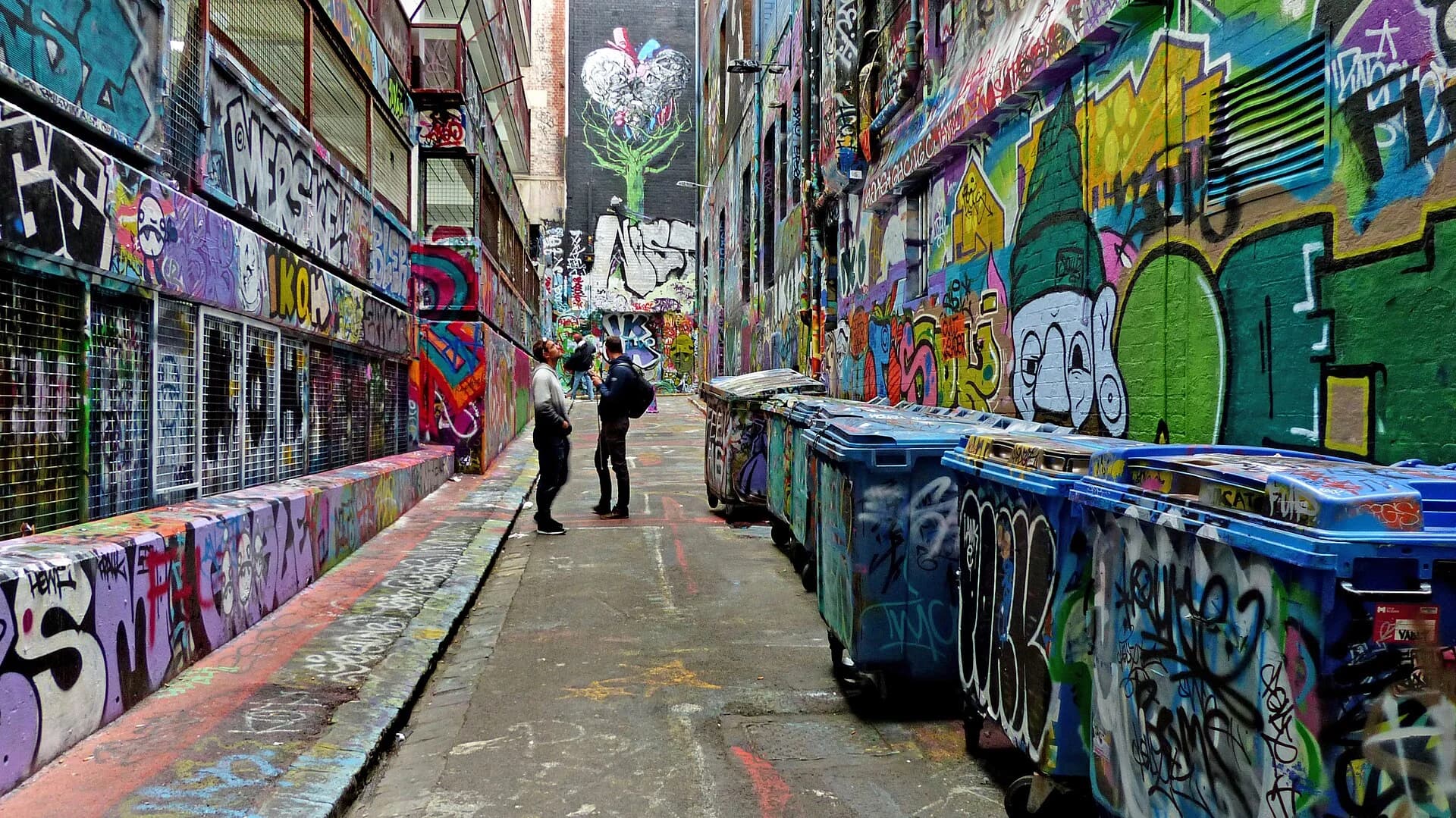
Every city has back alleys. Melbourne is the only Australian city that turned them into its main attraction. What began in the 1990s as a scatter of espresso machines and unauthorised aerosol art in the service lanes of the Hoddle Grid has become the thing visitors come for and the thing locals quietly organise their lives around. The City of Melbourne counts more than 200 laneways within the central city grid, and the best of them reward a slow, nosy, coffee-fuelled wander. No city in Australia rewards aimless walking like Melbourne, and its laneways are the reason.
Start at Hosier Lane
If you only see one lane, it will probably be Hosier Lane, directly opposite Federation Square off Flinders Street. It is the city's open-air gallery, a bluestone corridor where every surface from cobbles to drainpipes is layered in paint. The crucial thing to understand is that nothing here is permanent. A piece that stops you in your tracks on Tuesday may be gone by Friday, painted over by someone newer and hungrier. That churn is the point. Photographers arrive early for clean light and empty cobbles; by mid-morning the lane is a slow river of phone cameras. Duck into Rutledge Lane, the U-shaped offshoot halfway along, which is often wilder and less crowded.
From Hosier it is a short walk to AC/DC Lane, off Flinders Lane near Exhibition Street, renamed in 2004 in honour of the band and now home to rock bars, gig posters and some of the city's better paste-up art. It bends into Duckboard Place, where the street art shares wall space with some seriously good restaurants. This little pocket is the best single stretch for seeing how Melbourne lanes actually work: art, food and nightlife stacked into fifty metres of bluestone.
The coffee lanes
Degraves Street is the postcard: a narrow channel running north from Flinders Street Station, lined end to end with cafe tables, folding chairs and waiters carrying trays above tourists' heads. It is busy for a reason, and breakfast here remains one of the city's small pleasures. Purists will tell you to keep walking across Flinders Lane into Centre Place, which is scruffier, louder and arguably more Melbourne. This is the lane from a thousand Instagram posts, all dangling signage and hole-in-the-wall espresso bars, several barely wider than their own coffee machines.
The etiquette is simple. Order at the window, stand where you will not block the lane, and do not ask for a large anything. Melbourne coffee culture runs on small, strong and fast.
The arcades: laneways in formal dress
The Victorian-era arcades are the laneways' elegant older siblings, built when Melbourne was flush with gold money and determined to prove it. The Royal Arcade, running between Bourke Street Mall and Little Collins Street, opened in 1870 and is the oldest surviving arcade in the country. Look up at the southern end and you will find Gog and Magog, the carved giants who have flanked Gaunt's clock and struck the hour for well over a century.
A block away, the Block Arcade on Collins Street is the showpiece: mosaic floors, a glass canopy and the kind of ornate detail that makes first-time visitors stop mid-stride. In the 1890s, doing a lap of this arcade in your best clothes was called "doing the Block", and the name stuck. Finish at Cathedral Arcade on Swanston Street, a small art deco gem of leadlight and curved glass that doubles as the entrance to the Nicholas Building, nine floors of artists' studios, milliners and one of the city's most loved bookshops.
The ones most tourists miss
Union Lane, off Bourke Street Mall, is a sanctioned graffiti corridor where the work changes constantly and you can often watch artists mid-piece. Presgrave Place, tucked off Howey Place, trades spray cans for framed miniatures, tiny artworks and installations screwed to the brickwork, and it is many locals' favourite precisely because it stays quiet. In Chinatown, Croft Alley hides murals at the end of a dogleg turn, and Tattersalls Lane offers dumplings and a famously scruffy laneway bar. None of these will ever appear on a tour bus itinerary, which is exactly their charm.
A route that works
Here is a half-day loop that strings the best of it together. Start at Flinders Street Station, breakfast on Degraves Street, cut through Centre Place and the Block Arcade to Royal Arcade, then follow Bourke Street Mall to Union Lane. Work east through Presgrave Place, lunch in Chinatown via Croft Alley, then finish down AC/DC Lane, Duckboard Place and Hosier Lane as the afternoon light comes good. It is perhaps three kilometres all up, flat the whole way, and best done with no schedule at all.
Two practical notes. The lanes are at their most photogenic early on weekday mornings, before deliveries and crowds. And it costs nothing: the entire circuit sits inside the Free Tram Zone, and the art, the arcades and the people-watching are free. In a city that charges like a wounded bull for most things in 2026, the laneways remain Melbourne's great open secret, hiding in plain sight between the buildings.
Cover image: Bernard Spragg. NZ from Christchurch, New Zealand, cc0 via Wikimedia Commons.
About the author
Priya Nair
Priya Nair covers culture, food, and city life for Melbourne Headlines, from the laneways to the suburbs.